


Choosing Gloves by Healthcare Setting: A Buyer's Guide
Nitrile or latex is the first question. The second one, which most buyer's guides skip, is what your team actually does all day.
A veterinary tech restraining an anxious dog, a hygienist working in a patient's mouth for forty minutes, a caregiver changing dressings across a twelve-hour shift: same two materials, very different demands. Stocking one glove for an entire facility usually means someone is working in the wrong one.
Here's how the calculation shifts by setting.
New to the nitrile vs. latex question? Start with our [guide to nitrile and latex glove materials →] for the full comparison, then come back here for setting-specific guidance.
Veterinary Clinics: Precision & Protection for Animal Care

The work: General exams, surgeries, vaccinations, and handling animals that may scratch, bite, or resist treatment.
What matters most: Puncture resistance, then dexterity.
Veterinary work is the setting where tear risk is least predictable. An animal that was calm thirty seconds ago can change that, and a compromised glove during a procedure is a problem for everyone in the room.
Stock nitrile as the default, in a heavier weight than you'd use for routine exams. Its puncture resistance matters more here than the small dexterity advantage latex offers, and when nitrile fails, it tears visibly, so it gets noticed and changed.
Keep latex available for surgical and detailed diagnostic work, where tactile sensitivity is the priority, and the animal is sedated.
Browse Our Inventory of Latex Gloves
Dental Practices: Comfort Meets Allergy Protection
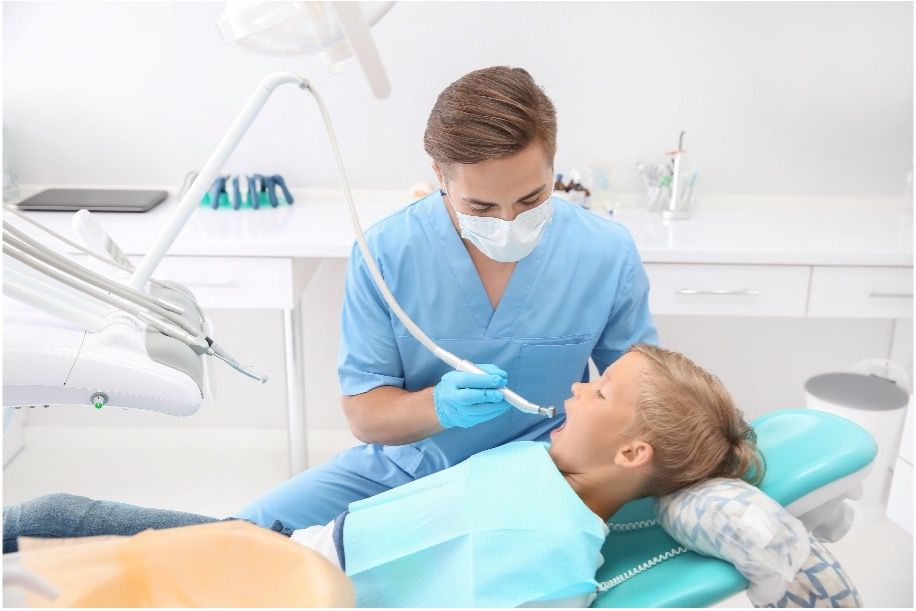
The work: Check-ups, cleanings, fillings, and surgical procedures much of it precise, close-range, and inside a patient's mouth.
What matters most: Fit and tactile feedback, with allergy risk as the deciding factor.
Dentistry is where latex's advantages are most real. It's also a setting where allergy exposure runs in both directions: your staff wearing gloves all day, and patients whose sensitivities you may not know about.
Nitrile is the safer default, and modern nitrile has closed much of the dexterity gap. If your practice still stocks latex, the question to answer is whether you're screening patients for sensitivity and whether every staff member is comfortable wearing it long-term.
Medical Facilities: Versatility & Compliance

The work: Routine exams, injections, wound dressing, minor procedures.
What matters most: Versatility across a wide range of tasks, and a size range that fits everyone.
General medical settings have the widest task variety and the widest range of hand sizes. This is where a full XS–XL size range matters more than the material debate — an ill-fitting glove gets substituted, pulled off, or skipped, and that's a compliance problem no material choice fixes.
Nitrile for most use, with weight varying by task: lighter for high-turnover exam work, heavier for handling and procedures.
Chemo-rated nitrile is a separate specification, not an upgrade. If your facility handles hazardous drugs or compounded medications, standard nitrile isn't rated for it.
Browse Our Inventory of Nitrile Gloves
Emergency Rooms: Speed & Strength Matter

The work: Trauma care, wound treatment, high-risk infectious cases, emergency procedures.
What matters most: Puncture resistance and speed of donning.
ERs combine the highest exposure risk with the least time to think about it. Sharps, blood, unknown infectious status, and no opportunity to check whether the patient has a latex allergy before you glove up.
Nitrile, and only nitrile. Most ERs have already made this switch. The allergy variable alone justifies it; you can't screen a patient who arrives unconscious.
Stock in bulk and in a full size range. Running short in an ER isn't an inconvenience.
Children’s Hospitals: Gentle Yet Protective

The work: Vaccinations, wellness checks, delicate procedures, handling newborns.
What matters most: Latex-free, without question.
Pediatric settings have a specific reason to avoid latex. The Spina Bifida Association's clinical guideline recommends avoiding latex-containing health care products from infancy onward as primary prevention, since repeated early exposure is associated with sensitization. Many children's hospitals adopted latex-free policies facility-wide for this reason.
Nitrile throughout. This isn't a preference question in pediatrics the way it is elsewhere.
Browse Our High-Quality Gloves
Nursing Homes: Long-Term Comfort & Protection

The work: Hygiene assistance, wound dressing, feeding, daily caregiving often in gloves for hours at a stretch.
What matters most: Comfort over extended wear, and cost across high volume.
Long-term care burns through gloves faster than almost any other setting, and staff wear them longer per shift. Both comfort and per-unit cost matter more here than in settings with shorter, more intermittent use.
Nitrile for most tasks. It holds up through extended wear without the irritation risk latex carries, and its barrier protection covers the bodily-fluid exposure that comes with daily care.
Vinyl for low-risk, short-duration tasks: light cleaning, meal service, basic handling. It's the cheaper option where clinical-grade protection isn't required, which helps stretch a budget that's mostly going to nitrile.
What Applies Everywhere
A few things hold regardless of setting:
Size range beats material choice. A team stocked with only medium and large will have people working in gloves that don't fit, and ill-fitting gloves get removed, substituted, or torn.
Weight should match the task, not the facility. Most operations default to one thickness across everything. Lighter for high-turnover exam use, heavier for handling and procedures.
Powder isn't a consideration. The FDA banned powdered patient examination gloves, powdered surgeon's gloves, and absorbable glove powder in the United States, effective January 18, 2017. If a supplier offers them, that's a reason to look elsewhere.
"Latex-free" is the accurate term, not "hypoallergenic." OSHA specifically warns that hypoallergenic and powder-free gloves are not necessarily latex-free. If avoiding latex is the goal, confirm the material rather than the marketing language.
Getting the Mix Right
Most facilities need more than one glove as a default for daily work, something heavier for handling, and sometimes a lower-cost option for low-risk tasks. Getting that mix right is usually a bigger cost lever than negotiating the unit price on any single one.
As a woman-owned, WBENC-certified supplier, CHA Supply stocks nitrile, chemo-rated nitrile, latex, and vinyl exam gloves in a full XS–XL range. [Talk to our team about the right mix for your setting →] or start with a smaller order to confirm fit before committing to a case.


Leave a comment